
Guides
Needle Holder Types: Mayo-Hegar, Olsen-Hegar, Mathieu
Published October 9, 2026 · SIALMED Industry
A needle holder is the instrument that decides whether a suture bite goes where the surgeon intended: its jaws must clamp the needle hard enough that it never rotates, yet release it cleanly at the end of the throw. The four patterns you will actually meet - Mayo-Hegar, Olsen-Hegar, Mathieu and Webster - differ in jaw strength, handle style and purpose, and the tungsten-carbide question changes both price and lifespan. This guide explains each pattern, how to size a holder to the suture, and the mistakes that twist needles mid-closure.
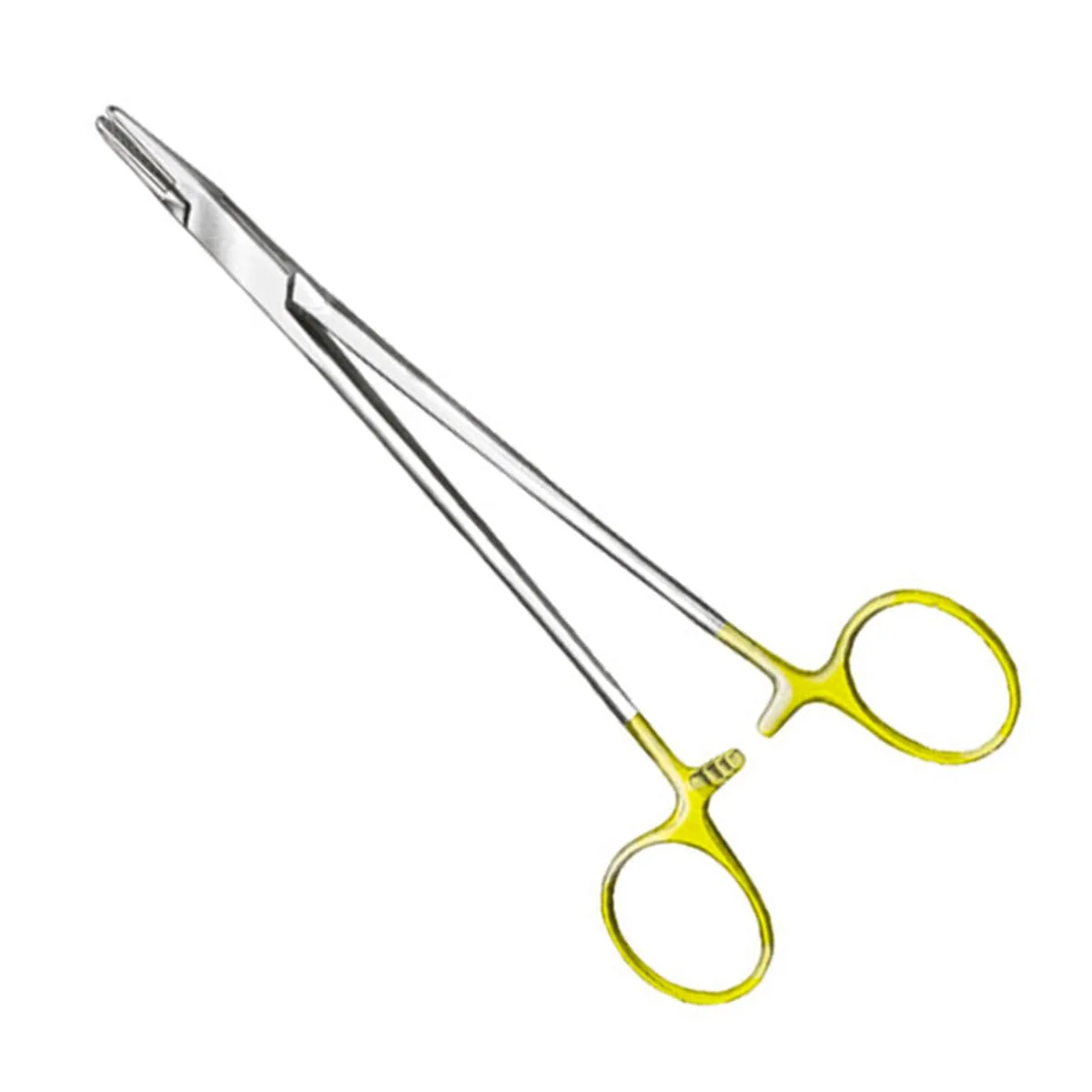
What makes a needle holder different from a hemostat
Needle holder jaws are shorter, wider and stronger than hemostat jaws, and the gripping surface is cross-hatched rather than transverse - cross-serrations bite the needle from two directions so it cannot spin. That is the whole engineering difference, and it is why the hemostats in your tray cannot substitute: their long transverse serrations let a needle roll.
Two details finish the tool. The ratchet: a multi-stop lock near the rings lets the grip be set at increments - cheap holders have two or three steps, good ones four or more. And the inserts: tungsten carbide pads brazed into the jaws (marked by gold-plated handles) give a far harder gripping surface than plain stainless, which is the difference between a needle that stays where it was aimed and one that squirms.
Mayo-Hegar: the general-purpose default
The Mayo-Hegar is the workhorse - short, strong jaws on a ring-handle body with a ratchet, in lengths from about 5 to 10 inches. The jaw geometry suits a wide range of needle sizes, which is why it sits in general surgery, OB-GYN and dental sets alike. Straight is standard; curved jaw versions exist for depth where the straight approach blocks the view.
The tungsten carbide version (gold-handled, carbide inserts) is the one to specify for daily suturing: the inserts hold polished needle surfaces noticeably better and last far longer between services. If a Mayo-Hegar slips a needle, either the needle is too large for the holder or the jaws are worn - both are cheaper to catch at purchase than mid-case.
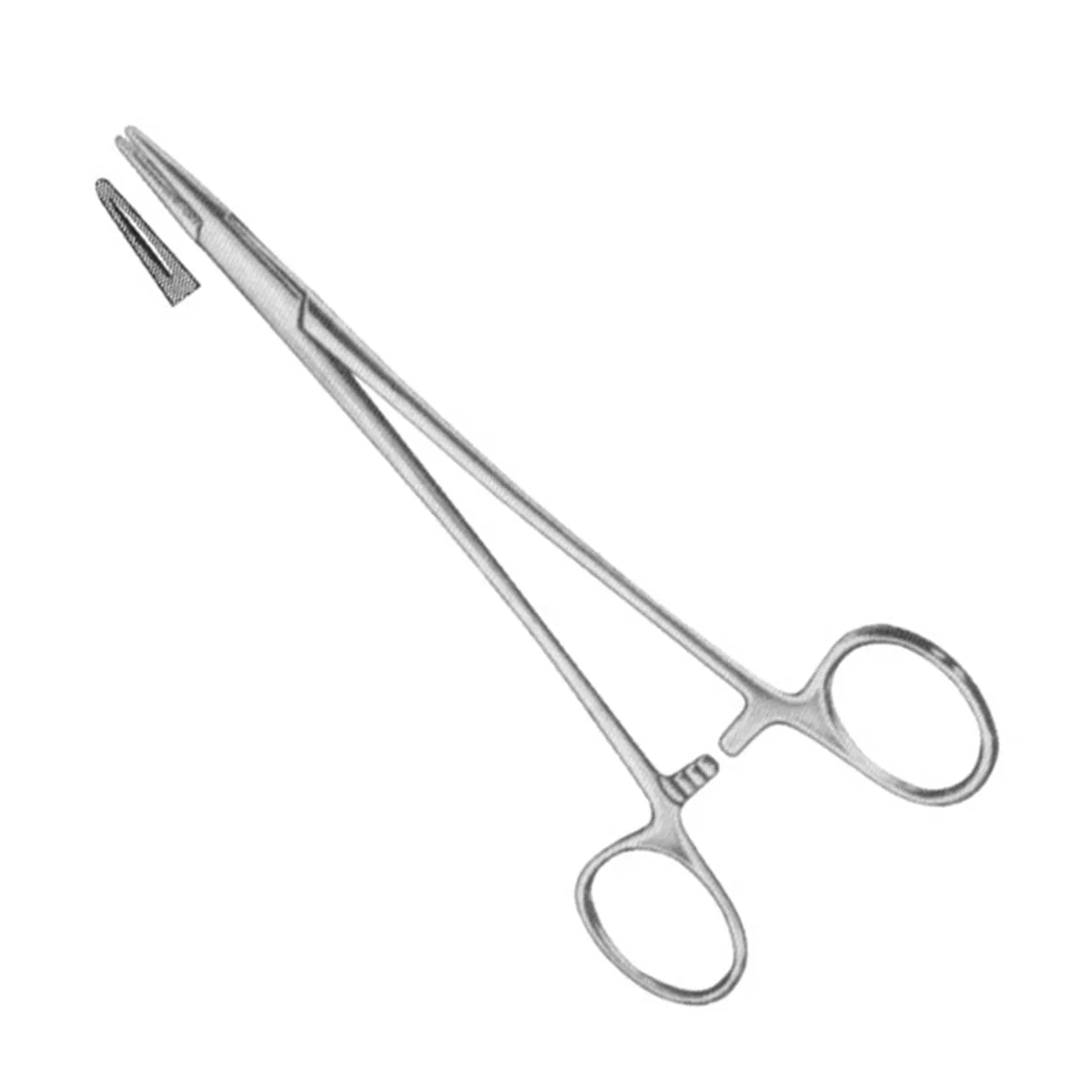
Olsen-Hegar: needle holder with built-in scissors
The Olsen-Hegar solves a small daily annoyance: cutting the suture after the knot without swapping instruments. The jaw body incorporates a scissor section behind the gripping surface, so the same hand places the bite, ties, and cuts. Solo operators and fast closures love it.
The trade-off is real: the combined tip is less tolerant across needle sizes than a plain Mayo-Hegar, and it can cut the suture strand if the thread is worked back into the wrong part of the jaw. Use it where speed matters and the suture range is consistent; keep a pure Mayo-Hegar for everything else.
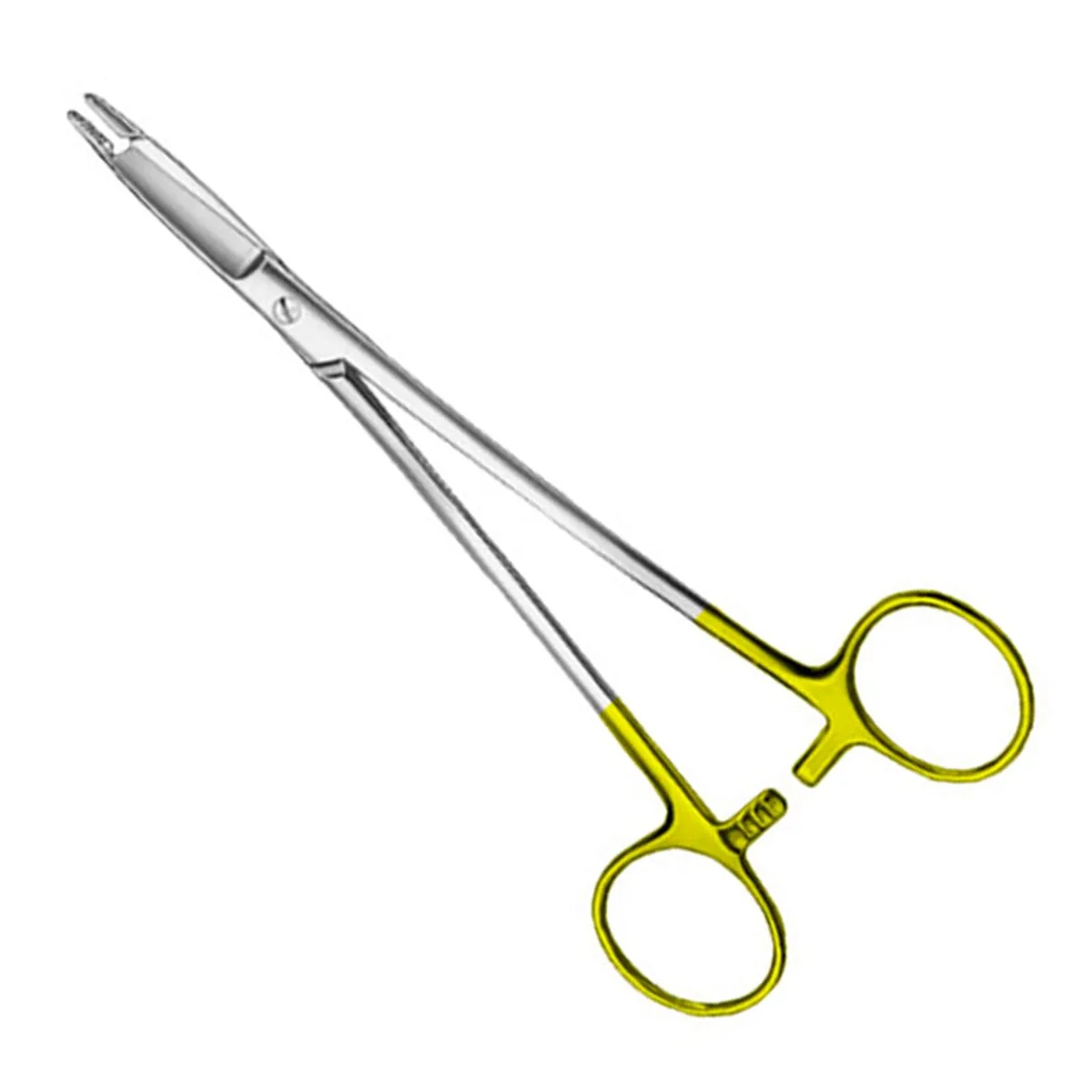
Mathieu: the plier-style pattern
The Mathieu throws the ring-handle convention away: it is plier-shaped, spring-loaded and locked with a multi-step ratchet at the back, held in a palm or pencil grip rather than through the rings. That makes it exceptionally quick for short, repetitive suturing - dental closures, skin, accessible surfaces - where the fingers drive the needle directly.
The Mathieu family scales from standard to tungsten carbide inserts, and its fine tips (the "mini" and delicate versions) reach where ring handles cannot. The flip side: the palm grip generates less rotational force than the ring-handle tripod grip, so deep, tough closures are better left to a Mayo-Hegar.
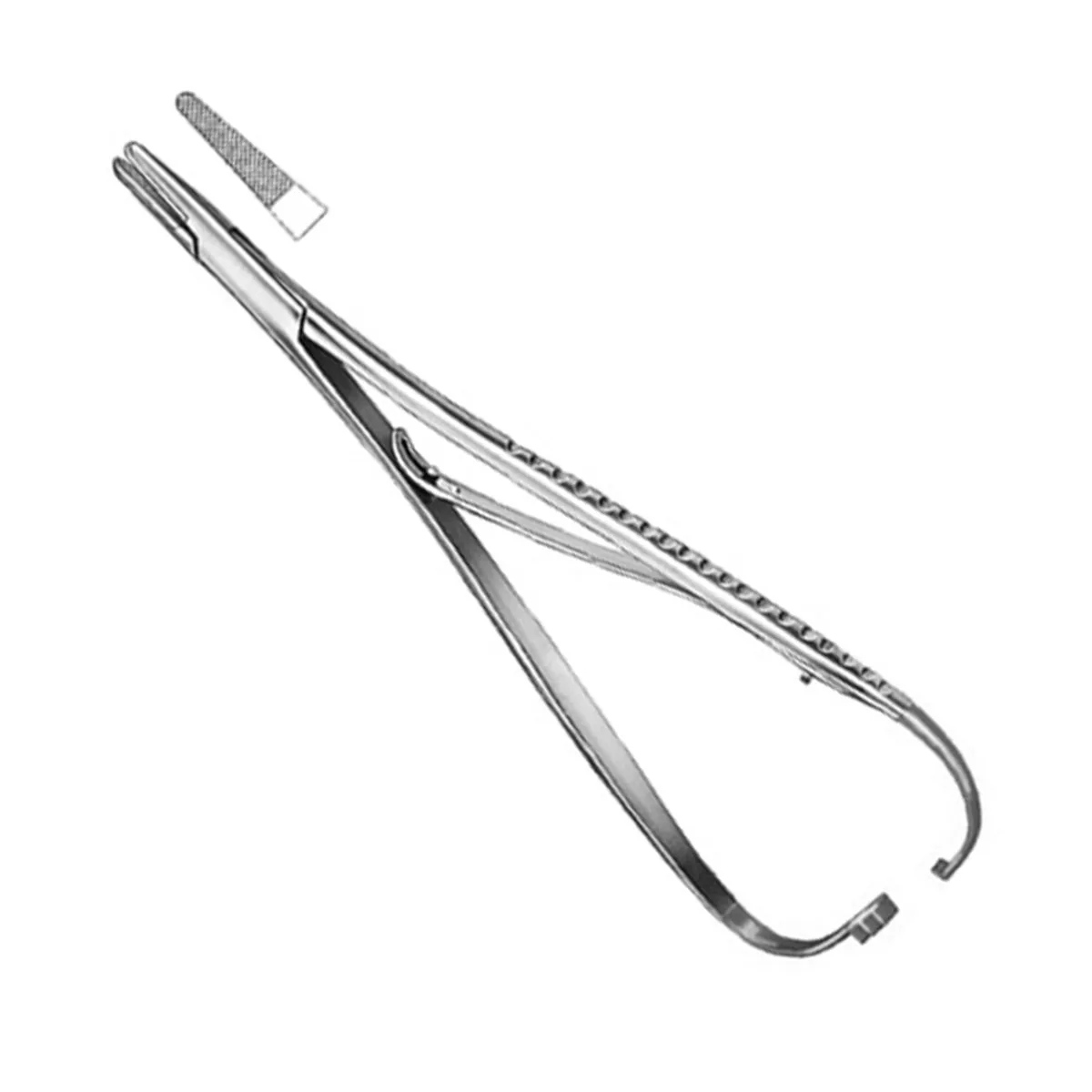
Webster and the fine patterns
The Webster needle holder is the small ring-handle pattern - typically 5 inches with fine jaws - built for fine suture and small needles in plastic surgery, ophthalmic work and delicate skin closure. Related fine patterns (Halsey, Crile-Wood, Castroviejo for micro work) follow the same logic: match jaw width and length to the smallest needle in regular use, because a large needle will bend fine tips and fine tips will not grip a large needle.
The sizing rule runs both ways, and ignoring it is the most common cause of "my needle holder keeps slipping": the holder must be the right size for the needle, not merely the right price.
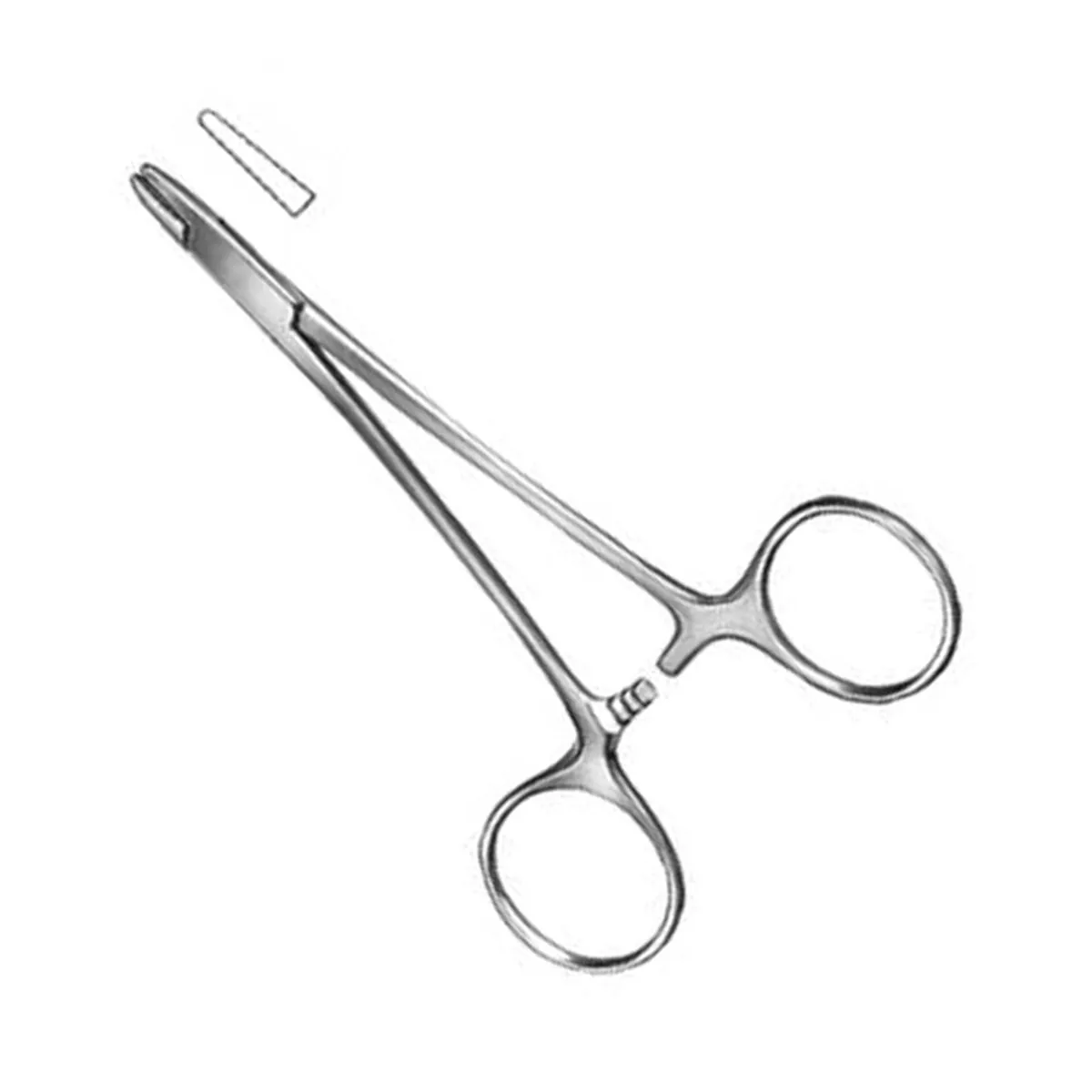
Matching holder to suture: a sizing chart
The table is a starting point, not a law: needle type (taper vs cutting), tissue depth and surgeon preference all shift the choice. What never changes is the direction of the mismatch - a needle outside the jaw range will rotate, and rotation is how a bite lands in the wrong place.
Needle geometry matters as much as suture size. A taper point needle for soft tissue is round in cross-section and needs even, firm jaw contact to stop it spinning; a cutting needle for skin has flat facets the jaws can register against. The same holder therefore feels different on the two, and trays that mix skin closure and deep soft-tissue work usually carry two holders rather than one compromise pattern.
| Pattern | Typical length | Needle / suture range | Best for |
|---|---|---|---|
| Webster / fine | 4.5-5 in | Fine needles, 4-0 to 7-0 | Plastic, ophthalmic, delicate skin |
| Mathieu | 5.5-6.75 in | Small to medium, 3-0 to 5-0 | Dental, skin, fast accessible suturing |
| Mayo-Hegar | 5-7 in | General range, 2-0 to 4-0 | General surgery, OB-GYN, dental sets |
| Olsen-Hegar | 5.5-6.25 in | Consistent general range | Fast closures needing built-in cutting |
| Long Mayo-Hegar | 8-10 in | Larger needles, 0 and heavier | Deep cavities, heavy closure |
Care, wear and the mistakes that ruin holders
- Never use a needle holder as a hemostat or pliers: the cross-hatched jaws deform under lateral load and never grip a needle the same way again.
- Force a needle that is too big for the jaws and you spring the tips - the slip you feel mid-suture is usually the damage appearing.
- Open the ratchet and the jaws during cleaning so the serrations and lock do not trap residue; follow the sterilization workflow exactly.
- Inspect TC inserts under light: worn or rounded inserts mean the needle rides up - replacement of the holder beats re-grinding, which destroys the cross-hatch.
- Store holders closed with protectors on the tips if transported loose; tip alignment is the whole instrument.
Frequently asked questions
What is the difference between a needle holder and a hemostat?
Needle holders have short, wide jaws with cross-hatched serrations (often tungsten carbide inserts) designed to lock a needle without letting it rotate. Hemostats have long jaws with transverse serrations made to clamp vessels. Using one for the other's job damages both: hemostats let needles slip, and needle holders clamp unevenly and mark tissue.
Mayo-Hegar or Olsen-Hegar - which should I buy?
Buy Mayo-Hegar as the default: it grips the widest range of needle sizes and is the pattern most sets expect. Add Olsen-Hegar where closures are frequent and fast and the suture range stays consistent, because its built-in scissors remove an instrument swap - at the cost of some versatility and the occasional accidental cut of the strand.
What does tungsten carbide mean on a needle holder?
TC inserts are hard carbide pads brazed into the gripping surface, marked by gold-plated handles. They bite polished needles far better than plain stainless, resist wear for years longer, and hold their grip through far more autoclave cycles. For instruments used daily, the premium pays for itself; occasional-use sets can run standard stainless without issue.
What size needle holder do I need?
Match it to your smallest common needle first: 4.5-5 inch fine patterns for 4-0 and finer, 5-6 inch general patterns (Mayo-Hegar, Mathieu) for 2-0 to 4-0, longer heavy holders for 0 and larger or deep cavities. A holder outside the needle's range will let it rotate, which is the failure mode to design against.
Why does my needle keep rotating in the holder?
The usual causes are: holder too large for the needle (jaws cannot surround it), worn jaws or rounded tungsten carbide inserts (grip has gone), a ratchet that will not hold, or clamping the needle on its ribbon rather than its body. Inspect each in turn - if the jaws or inserts are worn, the holder has reached end of life.
Related guides
Ready to order?
SIALMED manufactures the instruments discussed in this guide in Sialkot, Pakistan under ISO 13485 and FDA registration. Browse the full catalogue or request a quote - replies within one business day.