
Guides
Kelly vs Crile vs Mosquito Forceps: Key Differences
Published October 8, 2026 · SIALMED Industry
Three hemostats dominate every surgical tray - mosquito, Kelly and Crile - and at arm's length they look identical: ring handles, a ratchet, a box lock, curved tips. The differences are size and where the serrations run along the jaw, and together those two facts decide which vessel the instrument can safely occlude. This guide compares the three side by side, adds the patterns you will meet next (Kocher, Rochester-Pean), and settles the hemostat-versus-needle-holder confusion while it is here.
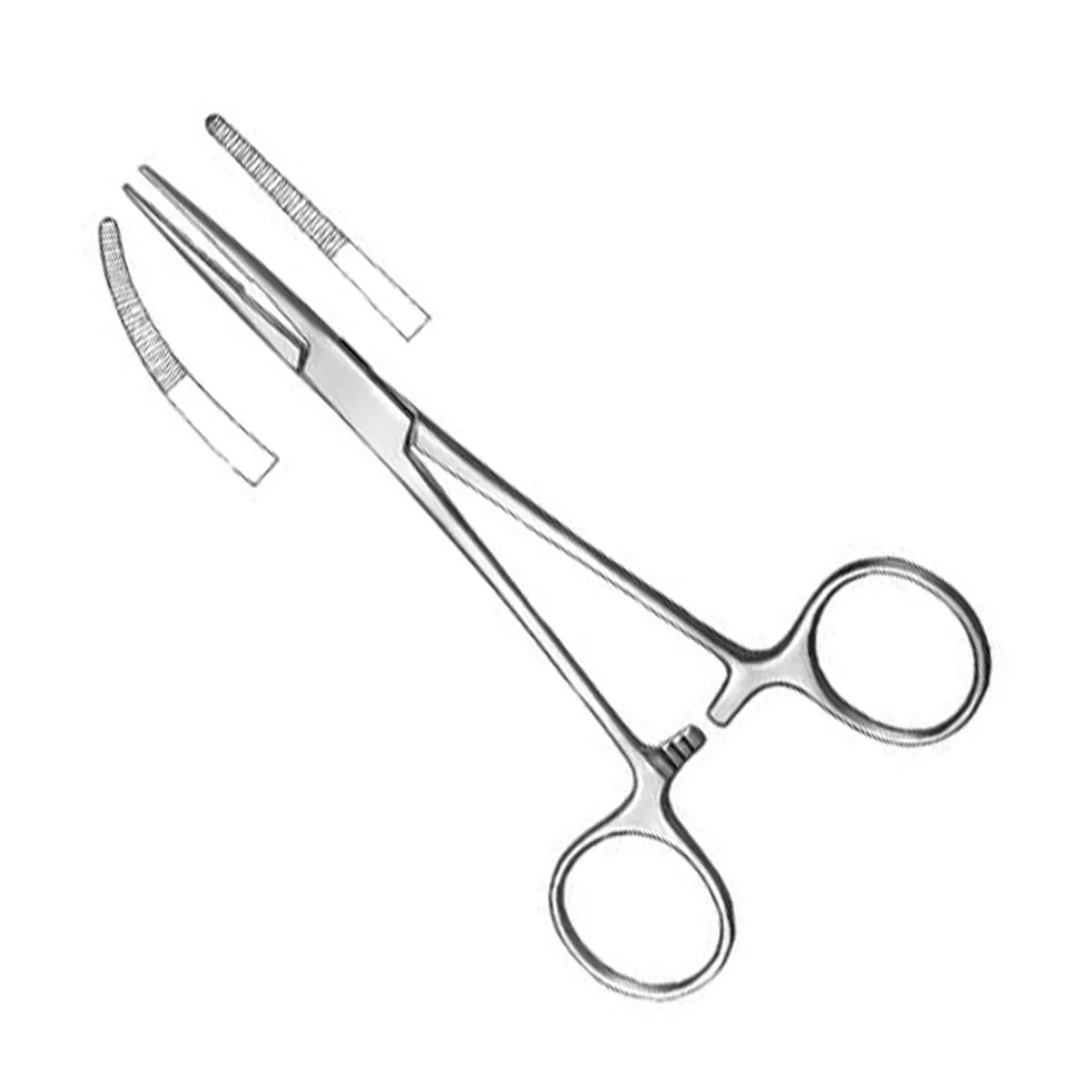
What a hemostat actually does
A hemostatic forceps clamps a bleeding vessel so it can be tied or cauterised, and doubles as a general grasping tool for tissue, suture and gauze. The mechanics are simple: transverse serrations run along the jaws to grip without cutting, a box lock keeps the tips aligned under pressure, and a ratchet near the rings holds the jaws closed at increments so the instrument stays clamped without a hand on it.
All three patterns share that mechanism; they differ in scale and serration coverage. If you are building a tray from scratch, start with the wider picture in our surgical forceps selection guide - hemostats are one family in it.
Mosquito (Halsted): the fine one
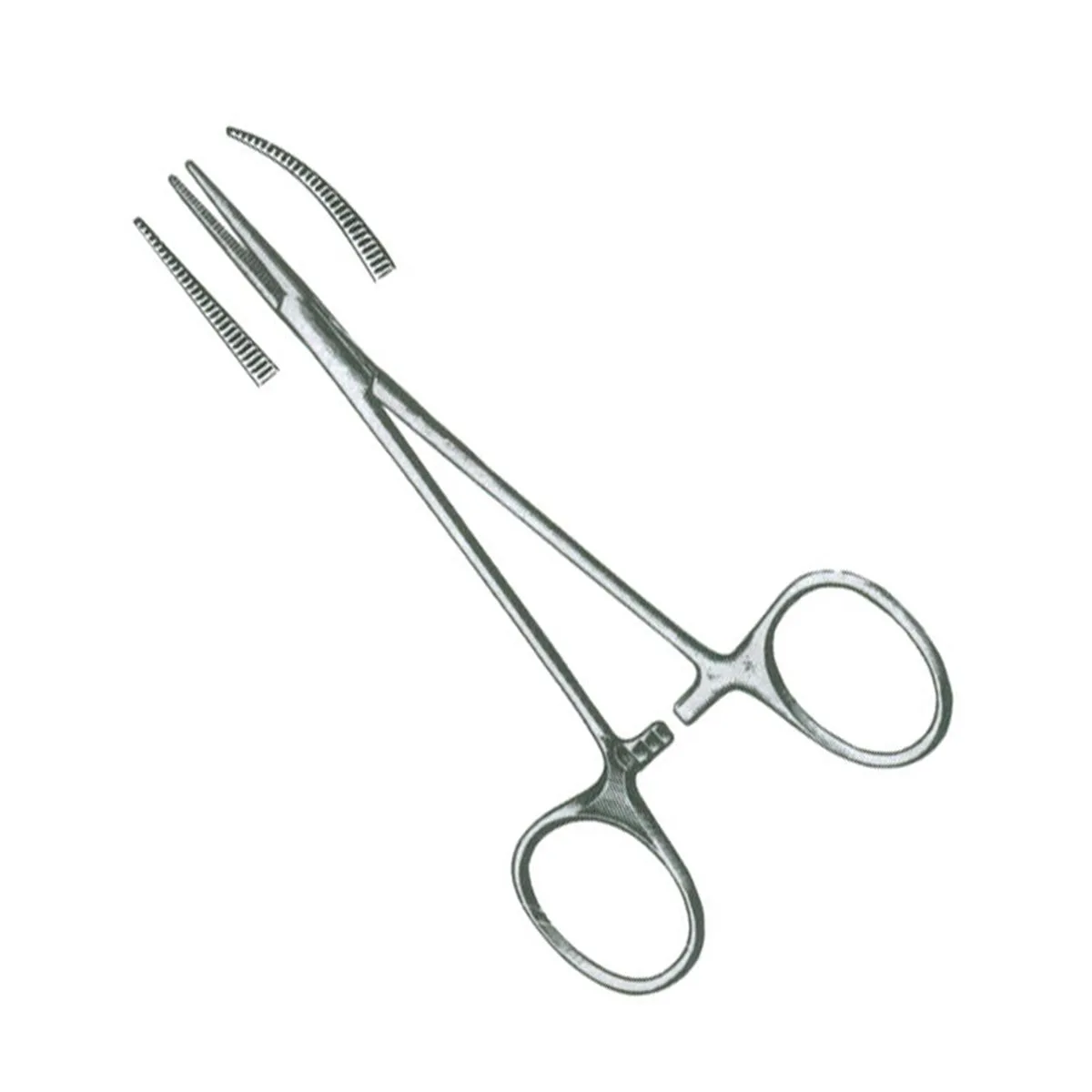
The Halsted mosquito forceps is the smallest of the three: about 12 to 12.5 cm long, with the finest tips and transverse serrations running the entire jaw length. It is made for small, delicate vessels and tight spaces - oral surgery, ENT, paediatric work, plastic surgery - and it is precise enough to double as a pickup forceps for small fragments.
The name is historical: William Halsted designed the pattern; "Halsted" and "mosquito" mean the same instrument. The trap with mosquitoes is using them on anything substantial: the jaws are thin, and clamping a large pedicle bends them out of alignment for good.
Crile: full-length serrations at full size
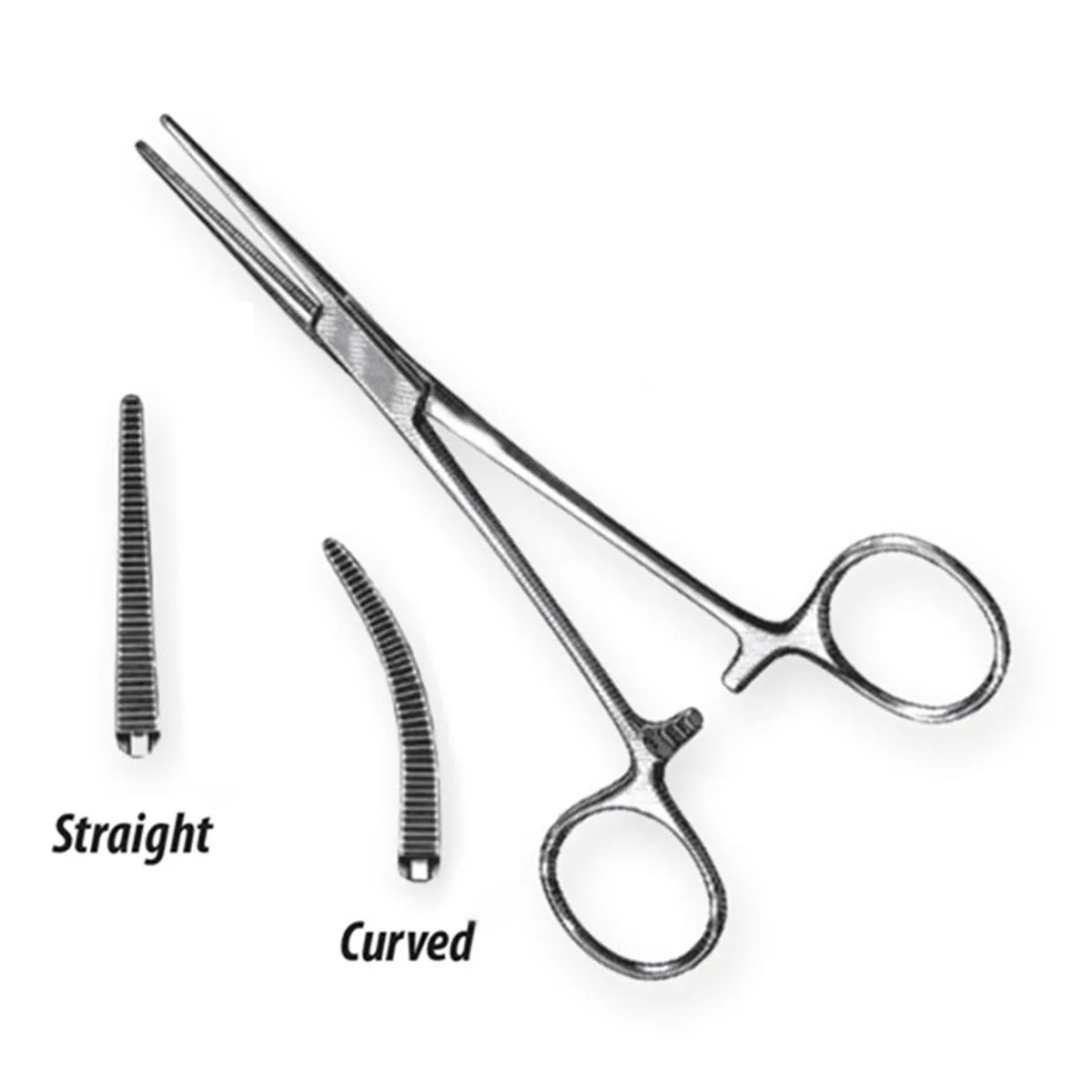
The Crile forceps is a full-size general hemostat, typically around 14 cm, with transverse serrations running the entire length of the jaw. Full-length serrations mean the grip is uniform from tip to box lock: the instrument holds along its whole working surface, which is what makes it the default for general surgical hemostasis on small to medium vessels.
Crile also exists in heavier and longer versions (Rochester-Crile and kin) for larger tissue, but the classic 14 cm pattern is what "Crile" means on an order form. Straight and curved variants both exist; curved is the common tray choice because the tip stays visible around the corner of the clamp.
Kelly: serrations on the distal half only
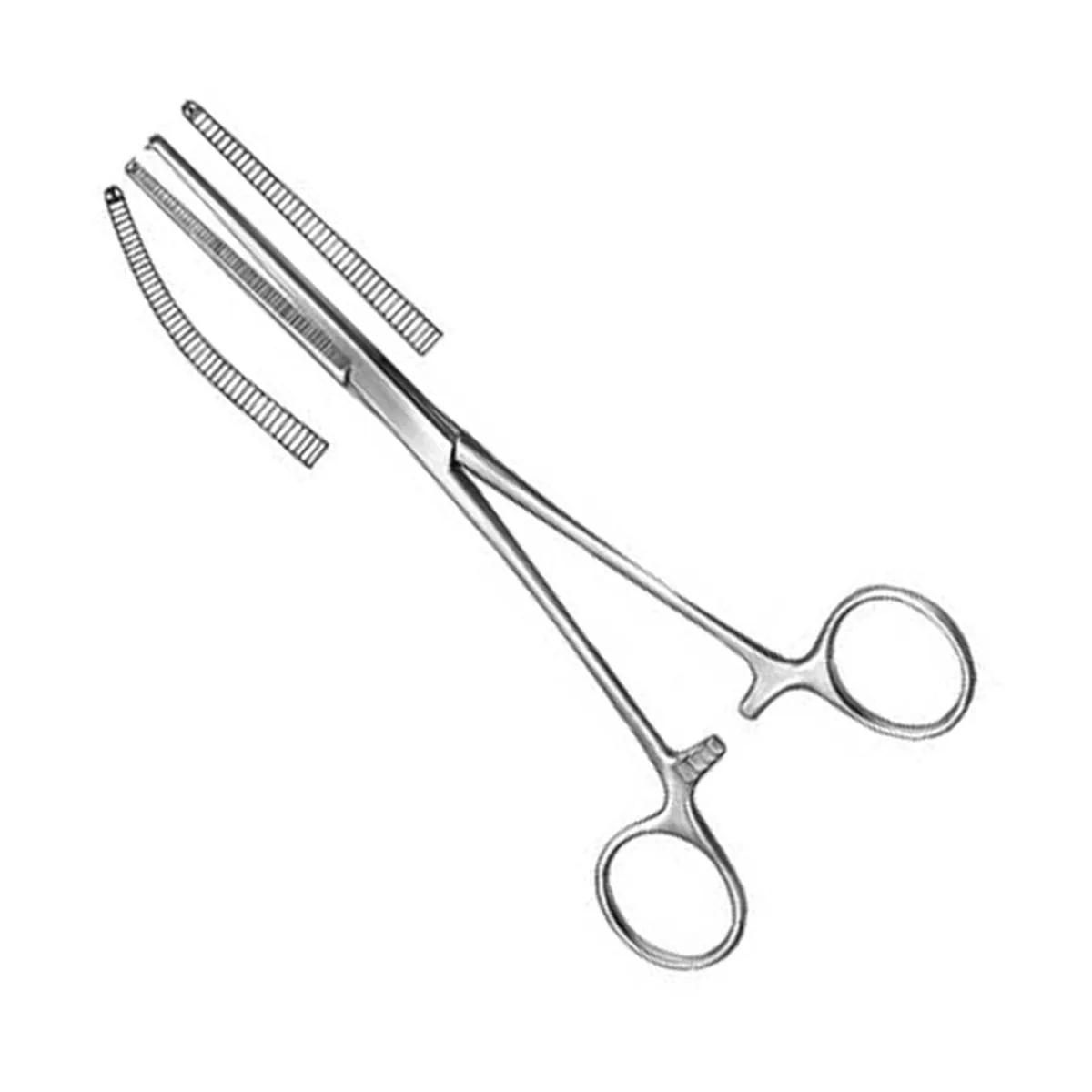
The Kelly forceps matches the Crile in size - also around 14 cm - but its serrations cover only the distal half of the jaw. Behind the serrated zone the jaw is smooth. The clinical logic: the tip grips the vessel while the smooth proximal jaw and shank spare the tissue being held deeper, and the slightly broader jaw gives more capacity on medium vessels and pedicles.
That half-smooth jaw is also the identification trick: hold the instrument up and look behind the serrations. Smooth shank behind the toothed zone = Kelly. Serrations all the way to the box lock = Crile. It is the single fastest way to tell two identical-looking hemostats apart on a full tray.
The three compared
Memory hooks that actually stick: mosquito bites small, Kelly grips half, Crile grips the whole jaw. Or visually: if you can see smooth jaw behind the serrations, you are holding a Kelly.
All three come straight and curved, and the curved variant is what most trays stock: the tip stays visible around the clamp and follows the vessel's path instead of lifting it off the field. Straight patterns survive for suture and dressing tasks where the flat bite matters. Ring colour coding - anodised gold or black handles - is a cheap OEM add-on that tells the circulating nurse at a glance which pattern is returning to the tray.
| Mosquito (Halsted) | Crile | Kelly | |
|---|---|---|---|
| Length | 12-12.5 cm | About 14 cm | About 14 cm |
| Jaw serrations | Full length, fine | Full length | Distal half only |
| Tip | Finest, most delicate | Medium | Medium, slightly broader |
| Clamps | Small, delicate vessels | Small to medium vessels | Medium vessels, pedicles |
| Typical setting | Dental, ENT, plastics | General surgical set | General surgery, grasping |
Beyond the big three: Kocher and Rochester patterns
The tray always holds more than three names. The Kocher forceps has interlocking teeth at the tip - aggressive by design, meant for dense tissue, stumps and heavy pedicles where slipping is not an option, and never for delicate structures. Rochester-Pean and Rochester-Carmalt patterns go the other way: larger, heavier jaws with longitudinal grooves for crushing grip on big pedicles without cutting them.
Each pattern earns its slot by tissue type: mosquito for fine, Kelly and Crile for routine, Kocher for tenacious, Rochester for heavy. Stocking three of each common pattern beats one of ten - the team reaches for the same two all shift.
Hemostat or needle holder? A common mix-up
Hemostats are not needle holders, despite looking like twins. Hemostat jaws carry transverse serrations that will let a needle rotate or skate; needle holder jaws are short, wide and cross-hatched (often with tungsten carbide inserts) specifically to bite the needle. Forcing a hemostat to drive a needle damages both - and the correct alternatives are covered in the needle holder types guide.
The reverse also matters: a needle holder makes a poor hemostat. Its short jaws clamp unevenly and the cross-hatching marks tissue. Two instruments, two jobs, and a tray should carry both.
What to stock
- Start with curved patterns in each of the three: mosquitoes for fine work, Criles and Kellys for routine clamping.
- Two or three of each common pattern rather than one of many - procedures consume hemostats in pairs and threes.
- Add two Kochers for dense tissue and one or two Rochester-Pean patterns for heavy pedicles.
- Ring colour coding (anodised handles) speeds identification mid-procedure and is standard on OEM orders.
- Inspect ratchets regularly: a ratchet that creeps open under load is finished, no matter how good the jaws look.
Frequently asked questions
What is the difference between Kelly and Crile forceps?
They are the same size - about 14 cm - but the serrations differ. Crile has transverse serrations along the entire jaw length, so it grips uniformly; Kelly has serrations only on the distal half, with a smooth proximal jaw that spares tissue. Look behind the serrations: smooth jaw means Kelly, serrations to the box lock mean Crile.
What is a mosquito forceps used for?
The Halsted mosquito hemostat - about 12 cm with the finest tips and full-length serrations - clamps small, delicate vessels and handles fine tissue and fragments. It is the default in dental, ENT, plastic and paediatric work, and doubles as a fine pickup. It is not for large pedicles, which bend its thin jaws.
Can I use a hemostat as a needle holder?
No. Hemostat serrations are transverse and let the needle rotate; needle holder jaws are short, wide and cross-hatched (often tungsten carbide) to lock the needle. Using a hemostat to drive needles damages the jaw pattern and risks the needle slipping mid-bite - use a Mayo-Hegar, Olsen-Hegar or similar proper holder.
How many hemostats should a general set include?
Typically six to ten: two to four curved mosquitoes, and two to three each of Crile and Kelly for routine clamping, plus one or two Kochers for dense tissue. Sets run in multiples because hemostats are commonly applied in pairs - running short mid-procedure is worse than carrying one spare.
What do Kocher forceps use teeth for?
Kocher tips have interlocking teeth that bite into dense tissue such as fascia, stumps and heavy pedicles so the clamp cannot slip off under traction. That grip is the point - and the limit: teeth crush and puncture, so Kochers must never be used on delicate or hollow structures where a plain Kelly or Crile is correct.
Related guides
Ready to order?
SIALMED manufactures the instruments discussed in this guide in Sialkot, Pakistan under ISO 13485 and FDA registration. Browse the full catalogue or request a quote - replies within one business day.