
Guides
Types of Surgical Scissors: Mayo, Metzenbaum, Iris
Published October 4, 2026 · SIALMED Industry
Surgical scissors look almost identical in a catalogue photograph - ring handles, a screw joint, two blades - yet the difference between a Mayo and a Metzenbaum shows up the moment one has to cut fascia and the other has to dissect bowel. This guide explains the main scissor patterns, what each one is actually built to cut, the sizes worth stocking, and the quality checks that separate an instrument holding its edge through thousands of cycles from one that goes dull in a few months.
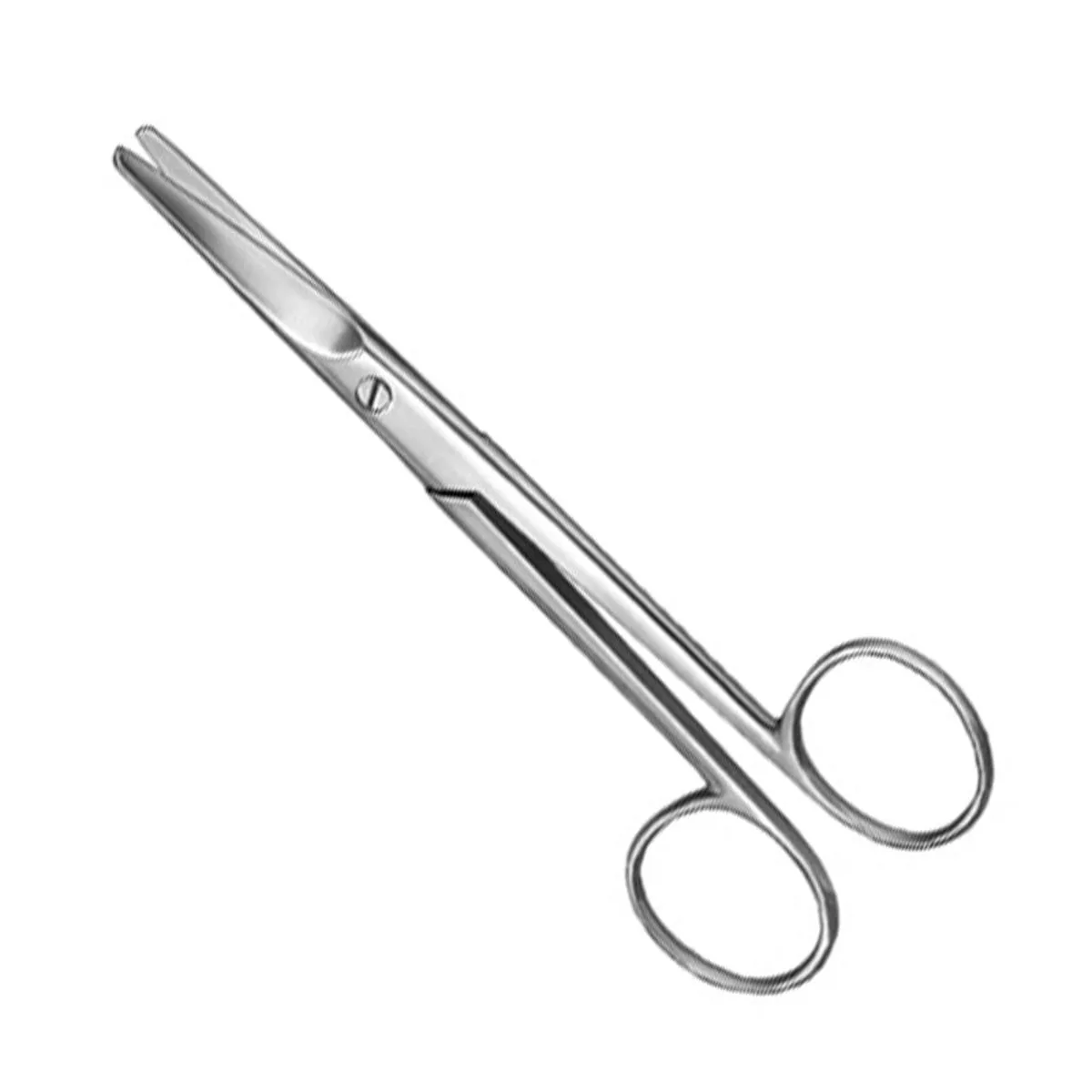
Two jobs: cutting tissue and cutting everything else
Every surgical scissor belongs to one of two families. Tissue scissors are built to slice living tissue cleanly without tearing: their blades are finely ground, the joint is precise, and the steel is hardened for a keen edge - usually a high-carbon grade such as AISI 440C, as covered in our stainless steel grade guide. Utility scissors cut dressings, sutures, packaging and drapes, where a tougher, blunter geometry matters more than scalpel-sharpness.
Three details reveal which family you are holding. The blade-to-shank ratio: tissue patterns have long slender blades relative to the shank, utility patterns the reverse. The tip: tissue scissors taper to a fine point, bandage scissors end blunt. And the weight: a Mayo sits noticeably heavier in the hand than a Metzenbaum of the same length, because it is meant to cut through fascia and sutures without complaining.
Tissue-cutting scissors: Mayo and Metzenbaum
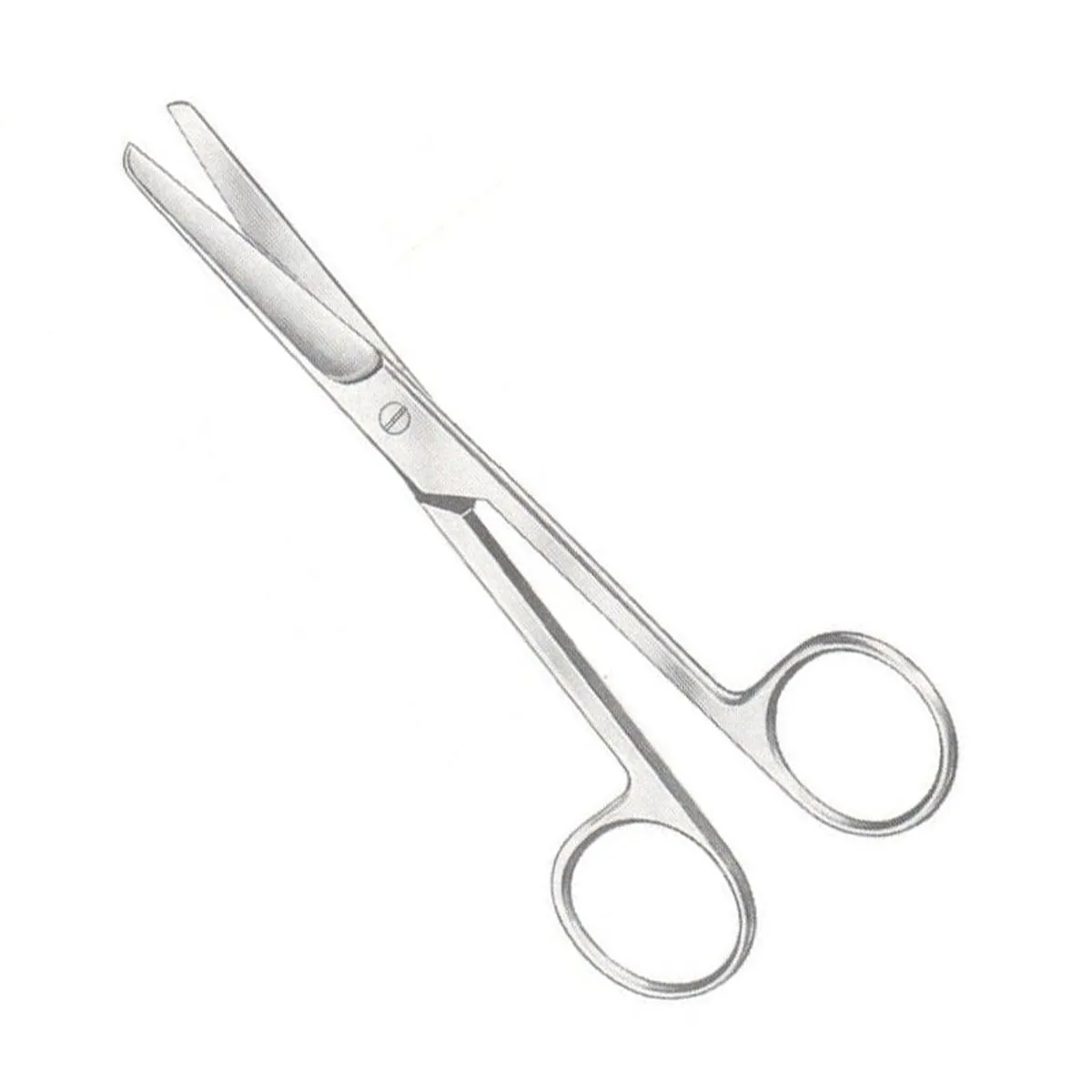
The Mayo scissors is the workhorse - a sturdy pattern with broad blades and a strong joint, made straight and curved. Straight Mayos are the classic choice for cutting sutures and for tougher tissue close to the surface; curved Mayos follow the contour of the body through fascia and muscle. Because the blades are stiff, a Mayo can also be used to dissect by pushing closed through tissue planes, a technique the finer patterns are not built for.
The Metzenbaum dissecting scissors is the delicate counterpart: a long shank with comparatively short, fine blades, usually curved, in lengths from about 18 cm upward. It is designed to dissect and divide soft tissue - bowel, fat, fine planes - where control and visibility matter more than force. A common set rule: carry both. Reach for the Mayo when the tissue resists, for the Metzenbaum when it must not be crushed.
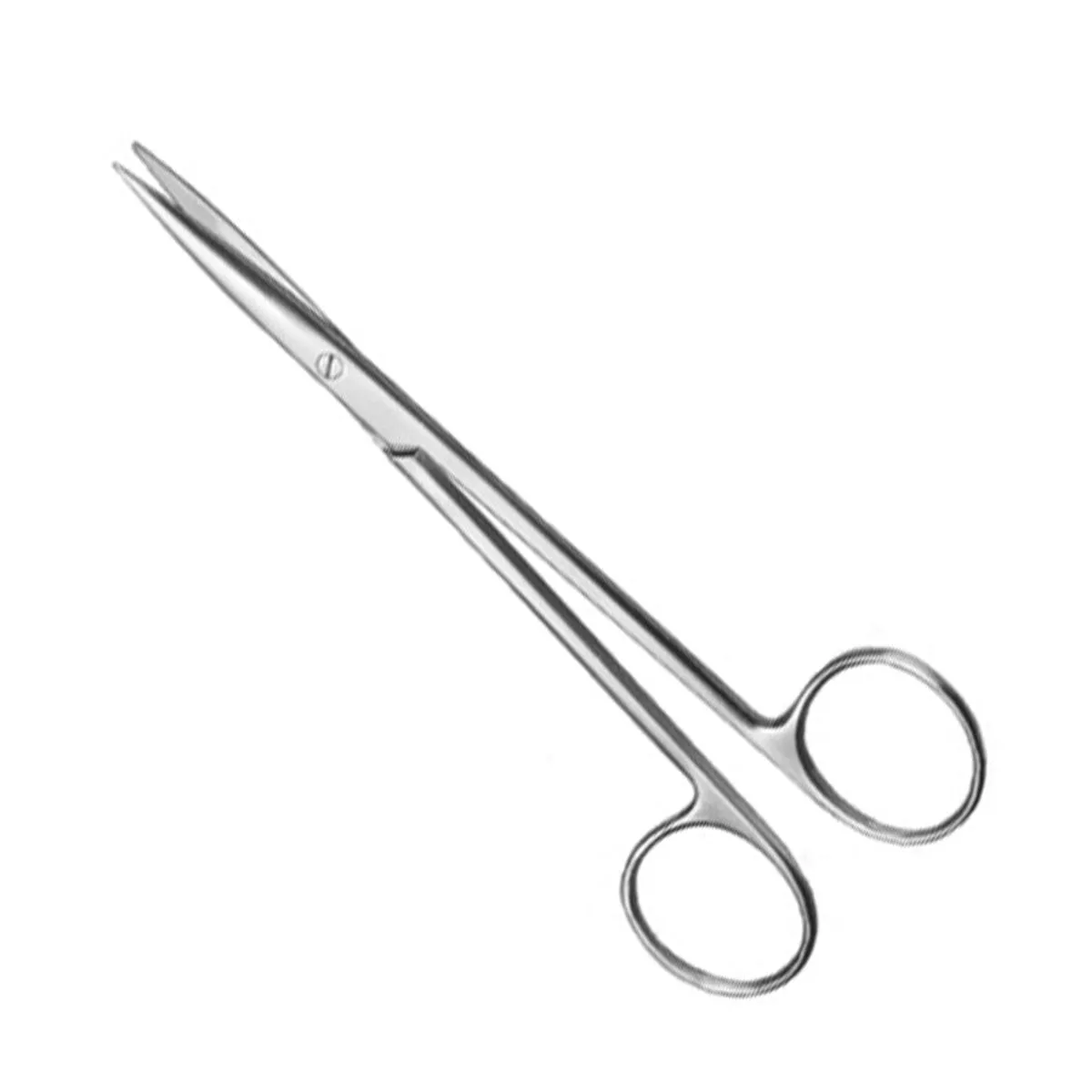
| Pattern | Typical length | Built for | Watch-out |
|---|---|---|---|
| Mayo | 14-18 cm | Fascia, sutures, tough tissue | Too heavy for delicate dissection |
| Metzenbaum | 18-22 cm | Soft tissue dissection | Blades flex on tough material |
| Operating (long) | 16-20 cm | General cutting at depth | Blunt tip reduces fine control |
| Fine / ophthalmic | 10-12.5 cm | Delicate structures | Never lever or twist with them |
Suture and dressing scissors: operating, bandage and stitch
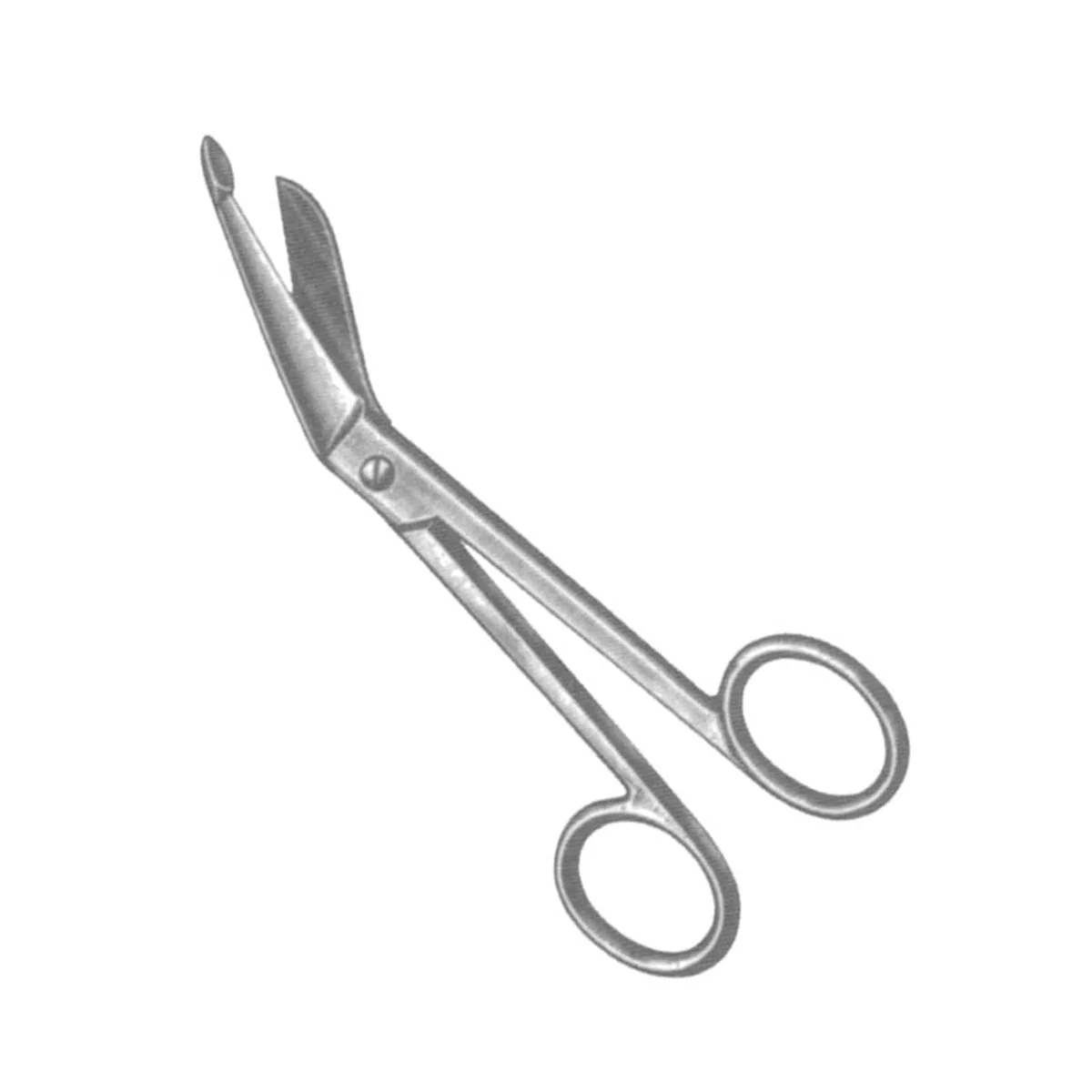
Utility patterns do the unglamorous work. Operating scissors are the all-rounders of the tray - straight or curved, used for cutting dressings, drapes, sutures and packaging where a tissue-grade edge would be wasted. The Lister bandage scissors is instantly recognisable by the blunt, flattened tip on the lower blade: it slides under a bandage or tape against the skin without nicking the patient, which is why it lives in every dressing pack rather than the instrument tray.
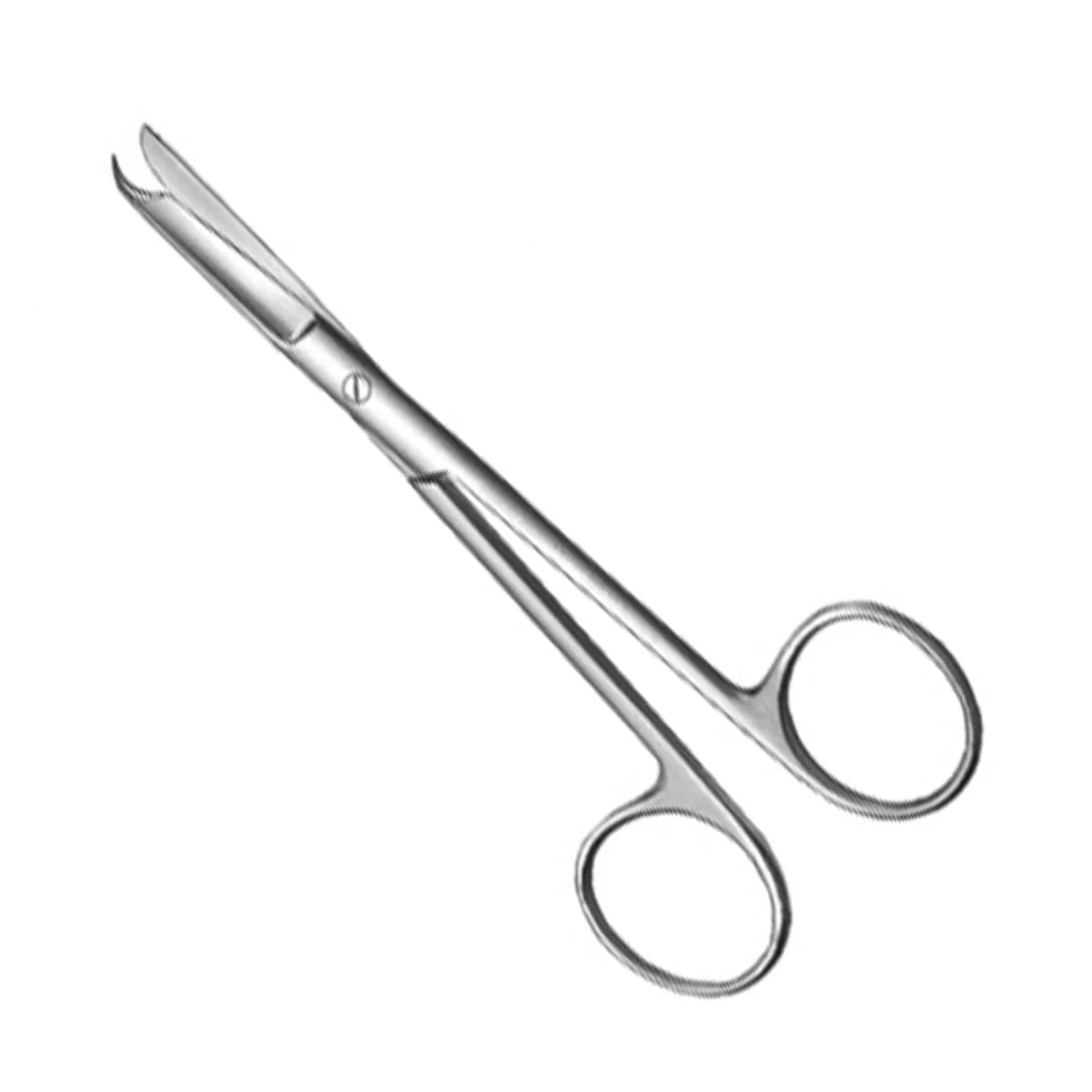
The stitch or Spencer scissors closes the loop on wound care: one blade carries a small hook or notch that lifts a suture off the skin so the cut is made cleanly at the knot. Cuticle-style designs serve the same purpose in smaller fields. None of these belong in a dissection set, and none should ever be used to cut tissue - the blade geometry is simply wrong for it, and attempting it ruins the edge.
Fine work: iris scissors and the small patterns
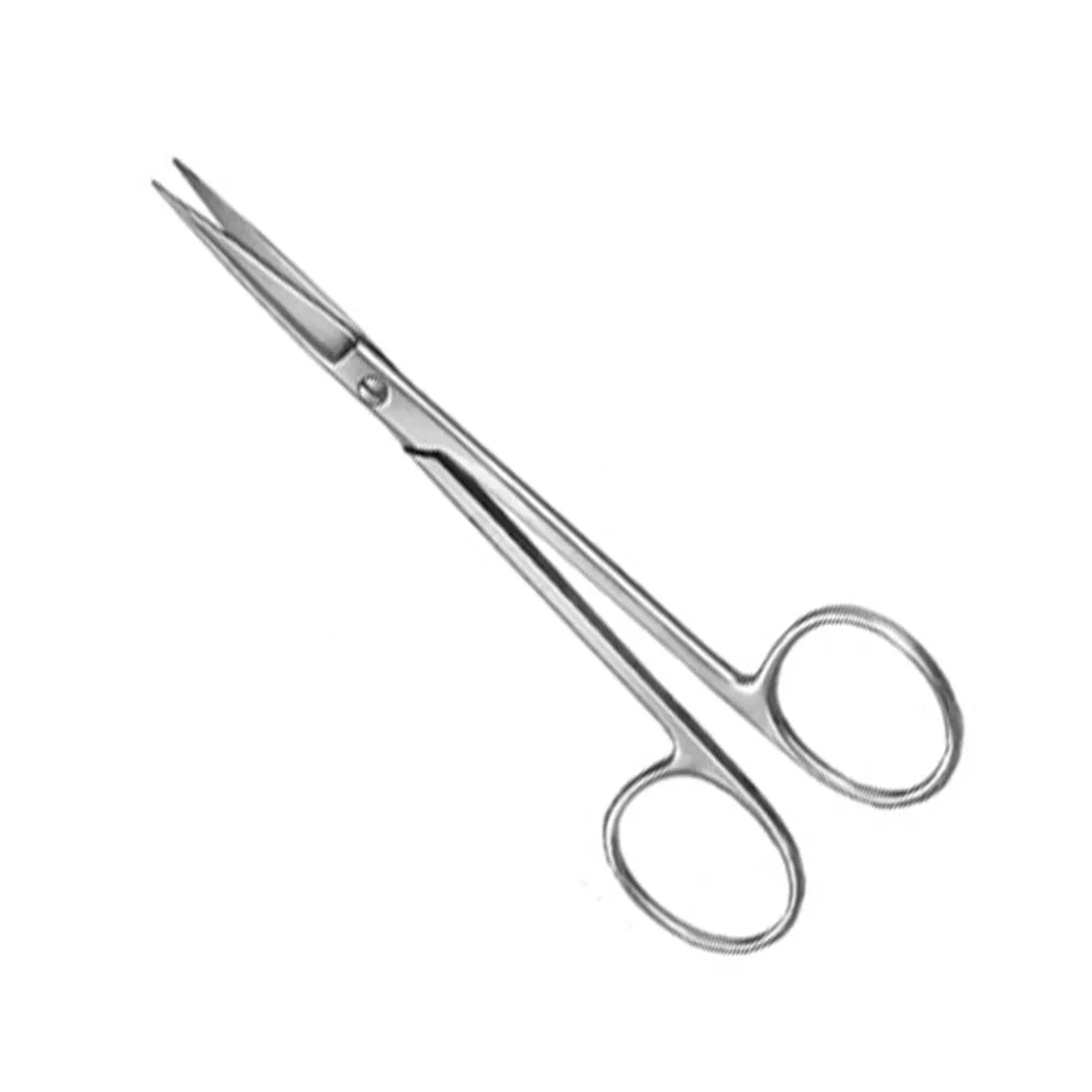
At the small end sits the iris scissors - roughly 10.5 to 12.5 cm, slender, sharply pointed and very finely ground. Originally an ophthalmic pattern, it now turns up wherever precision matters more than reach: ENT, cuticle and nail work, fine vascular procedures and laboratory use. The small size gives the fingers maximum control, but the blades are thin: using iris scissors to cut a suture or a dressing here quickly rolls the edge and the scissor is finished.
Finger-ring size matters at this scale too - a small ring forces a full three-finger grip that reduces fine rotational control. When matching scissors to delicate work, hold the actual instrument before ordering: a pattern that suits one hand size can be awkward in another, and awkwardness in micro work shows up as ragged cuts.
Straight or curved, and the sizes worth stocking
Curvature exists so the hand and the line of sight stay out of the way: curved blades cut along a contour and let the surgeon see past the tip, straight blades cut on a flat line and are easier to control for chopping motions such as suture removal. In practice a general set carries straight scissors for utility work and curved scissors for tissue, and nobody regrets the second pair.
Length follows depth, not preference. Small scissors for superficial and fine work, a 14-16 cm standard pair for general procedures, and a long 18 cm or beyond pattern for deep cavities where the hand must stay outside the field. Buying one length for everything is the classic starter-set mistake.
| Size class | Length | Typical use |
|---|---|---|
| Fine / iris | 10.5-12.5 cm | Ophthalmic, ENT, nail and fine detail work |
| Standard | 14-16 cm | General surgery, suture cutting, utility tasks |
| Long | 18-25 cm | Deep cavities, abdominal work, out-of-sight reach |
What to check before you buy
- Close the scissors and hold them against light: the blades should meet along their whole length with no gap that lets paper through.
- The screw joint must be tight enough to hold alignment and loose enough to open without grinding - a joint that clicks sideways is already worn.
- Serrations, where present, should be uniform; blades should show no nicks, white stress marks or burrs at the tip.
- Ask for the steel grade: cutting edges want a hardenable martensitic grade such as 440C at 56-60 HRC; a datasheet that only says "stainless" is not an answer.
- Tungsten carbide inserts (the gold-handled convention) last noticeably longer between sharpenings - worth it for scissors that see daily use.
- Check the finish: satin reduces glare under theatre lights, and every surface should be passivated so it survives autoclave cycles without spotting.
Care: keeping the edge through sterilization
Scissors die in the cleaning process far more often than in the operating room. Alkaline detergents attack the passivation layer, hard water spots the blades, and dropped scissors knock the fine tips out of alignment - all of it covered in the instrument sterilization guide. The short version: open the joints during washing, rinse with purified water, dry immediately, and never stack loose scissors in a tray without separators.
Sharpening should be left to professionals and done sparingly: each pass removes the factory bevel a little further, and re-serrating a bandage or stitch scissor in-house is not realistic. Budget for replacement rather than repair - it is cheaper, and it guarantees the pattern you actually ordered.
Frequently asked questions
What is the difference between Mayo and Metzenbaum scissors?
Mayo scissors are heavy and sturdy, built to cut tough tissue such as fascia as well as sutures; they come straight and curved. Metzenbaum scissors have a long shank with short fine blades and are meant only for dissecting and dividing delicate soft tissue. The quick rule: if it resists, reach for the Mayo; if it must not be crushed, use the Metzenbaum.
What are surgical scissors made of?
Quality cutting instruments use hardenable martensitic stainless steel - most often AISI 440C hardened to 56-60 HRC - so the edge stays sharp through use and reprocessing. Premium patterns add tungsten carbide inserts at the cutting edge, marked by gold-plated handles, which stay sharp roughly twice as long between sharpenings.
Why do bandage scissors have a blunt tip?
The flattened, blunt lower blade of the Lister bandage scissors is a deliberate safety feature: it slides under a dressing, tape or suture against the patient's skin without cutting or scratching it. It is also why bandage scissors must never be used on tissue - the geometry cannot cut cleanly.
What size surgical scissors should a general set carry?
A practical general set carries three: a 14-16 cm curved tissue pair, a straight utility pair of the same length, and a small fine pattern such as 11 cm iris scissors for detail work. Depth-driven sets add an 18 cm or longer pair for cavity work. Two of each common pattern beats one of five different ones, because the team reaches for the same pair repeatedly.
Can surgical scissors be sharpened?
Yes, but by a professional and sparingly - each sharpening removes a little more of the factory bevel, and serrated patterns such as bandage or stitch scissors cannot be properly restored outside a factory. When a pair no longer cuts suture cleanly under its own weight at the tips, replacement is cheaper and safer than another grind.
Related guides
Ready to order?
SIALMED manufactures the instruments discussed in this guide in Sialkot, Pakistan under ISO 13485 and FDA registration. Browse the full catalogue or request a quote - replies within one business day.