
Guides
Surgical Retractor Types, Names and Uses Explained
Published October 6, 2026 · SIALMED Industry
A retractor does one job - hold the incision open so hands and instruments can work - but the difference between a comfortable exposure and a frustrated team is choosing the right pattern for the anatomy. This guide covers the two decisions that matter (handheld or self-retaining, sharp or blunt), walks through the common names you will meet on a purchase order - Richardson, Deaver, Farabeuf, Balfour, Gelpi - and shows how each pattern is actually used.
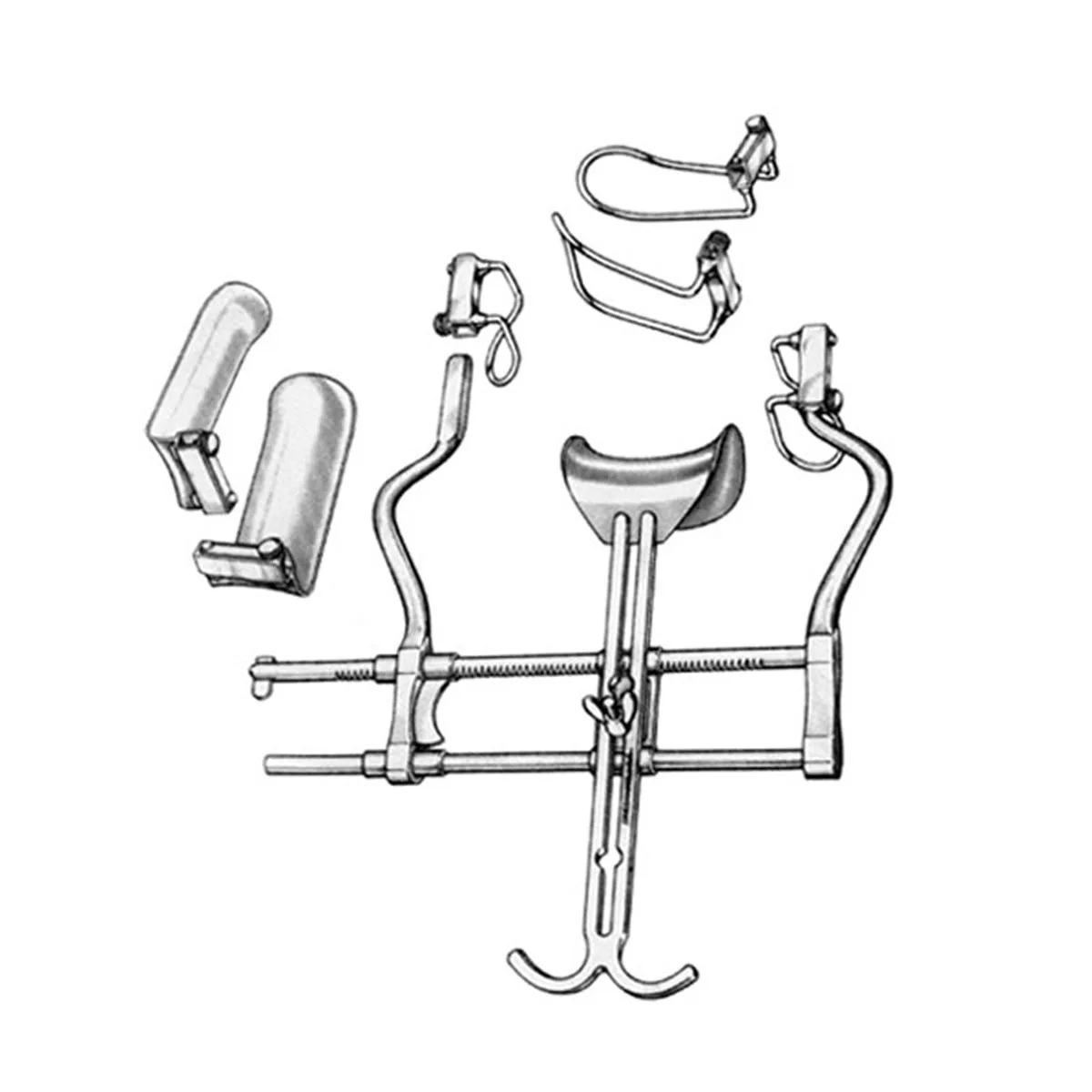
Two decisions: handheld or self-retaining, sharp or blunt
First, who holds it. Handheld retractors are pulled by an assistant: simple, cheap, infinitely adjustable, and dependent on someone not getting tired. Self-retaining retractors lock open with a ratchet or frame: they free an assistant's hands and hold a long incision at a constant depth, at the cost of being harder to adjust mid-procedure and unforgiving if placed badly.
Second, what touches the tissue. Sharp (or sharp-blunt) hooks grip and will not slip, which suits tough structures like fascia and skin but will mark delicate tissue. Blunt blades press and lift without penetrating - the default for anything hollow or fragile. Many patterns exist in both versions; the name alone does not tell you which you are holding, so check the tip before it meets tissue.
The practical consequence shows up thirty minutes into a long case: a handheld retraction held by one tired assistant drifts, and with it the exposure. Self-retaining patterns exist precisely because fatigue is a clinical variable - but they trade that stability for a fixed position and one more instrument to count at closure. Most trays therefore use a frame for the main incision and handhelds for everything that still needs adjusting by feel.
Handheld staple: the Richardson retractor
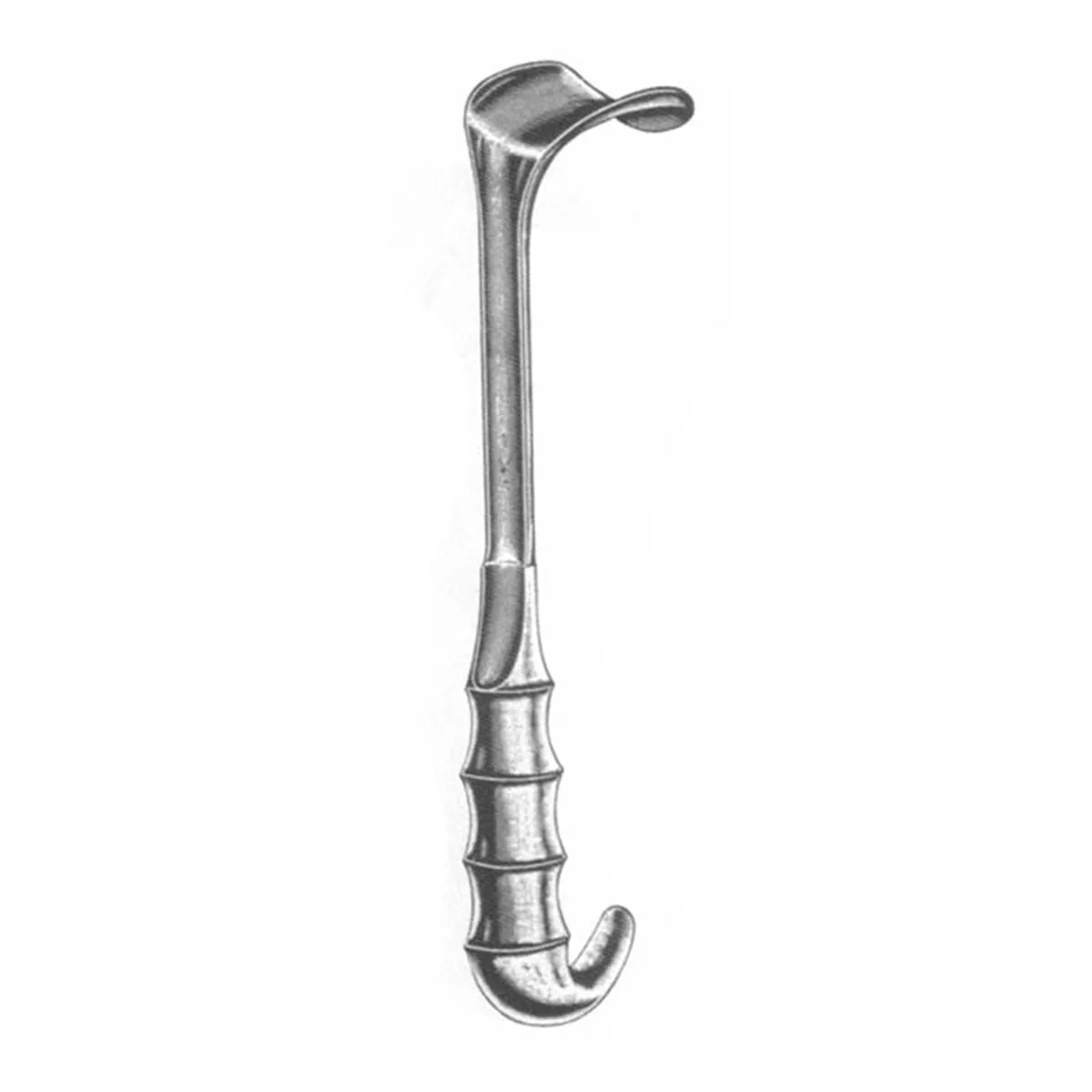
The Richardson retractor is the general-purpose handheld you will see in abdominal trays everywhere: a long, slightly curved blade on a flat handle, often double-ended with a second smaller blade at the opposite end. One hand pulls, the blade presents a broad, smooth wall of exposure along an incision edge. Width and depth of the blade are what you are really choosing - a wide blade distributes pressure for abdominal walls, a narrow one fits smaller openings.
Because it is handheld, the Richardson also doubles as a teaching instrument: an assistant learns retraction by feel with this pattern more than any other. Its limits are depth and duration - the deeper the field, the more a self-retaining frame pays for itself.
Deep holds: Deaver and surface control: Farabeuf
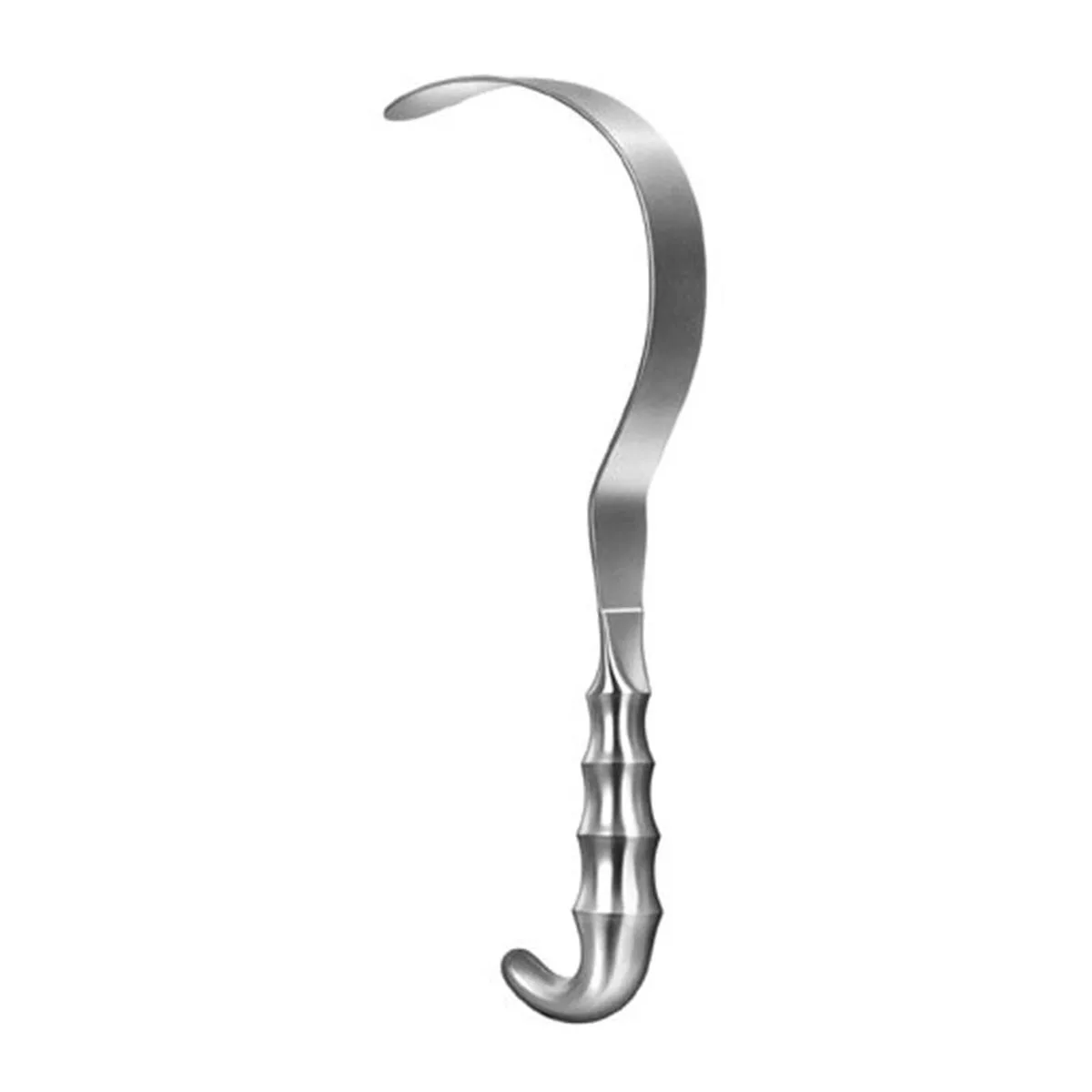
The Deaver retractor is the deep-work specialist: a long, narrow blade curved into a graceful hook with no fenestrations, designed to reach into the abdomen and hold back bowel or liver with a broad, atraumatic curve. It is heavy, purely handheld, and needs an assistant who understands that the curve - not the edge - is what holds. Deavers typically come in a graduated set of sizes so the blade matches the depth of the cavity.
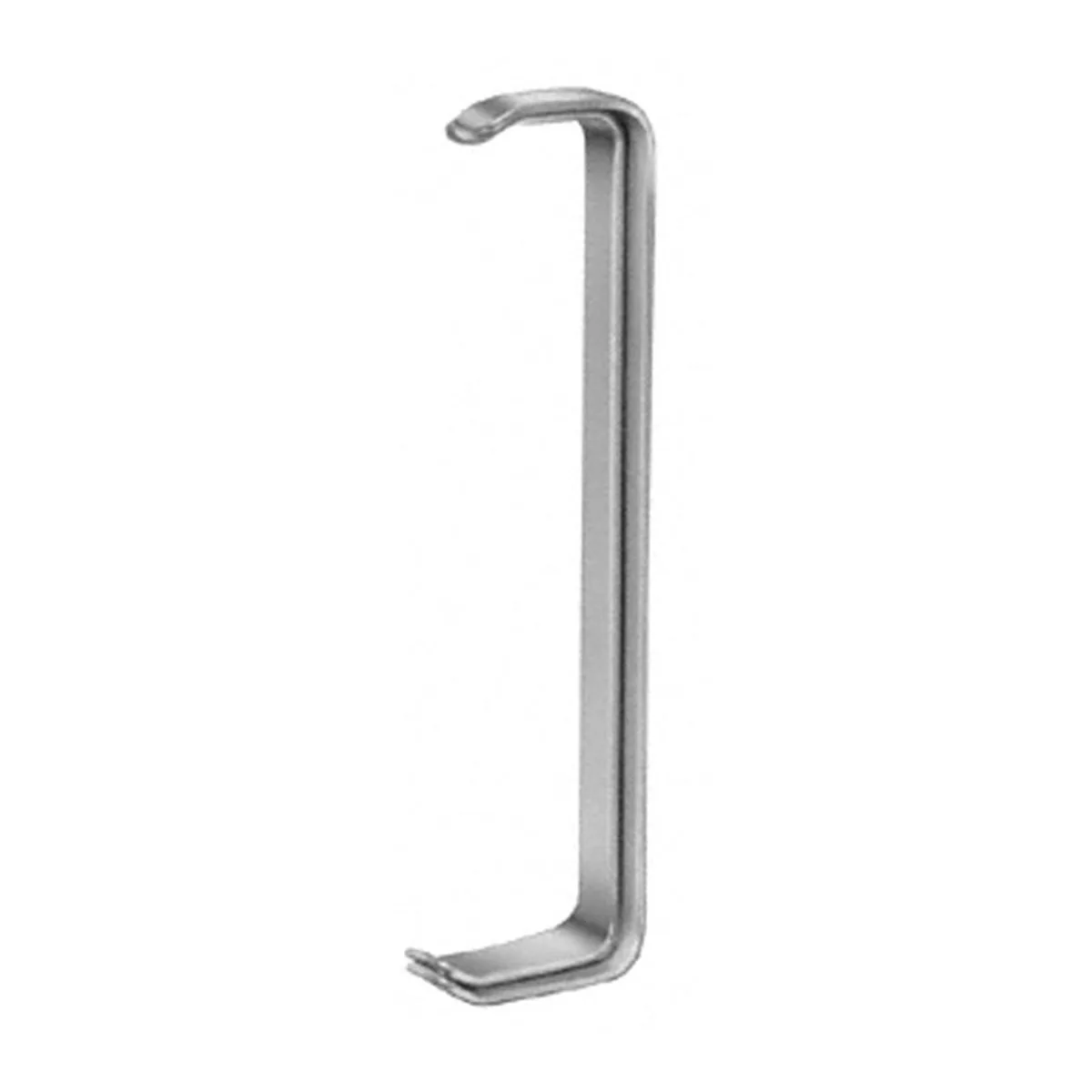
At the other end of the scale, the Farabeuf retractor is a double-ended handheld with two flat, square-ended blades - one wider than the other - made for superficial exposure: skin, fascia, small openings. The blunt square tips refuse to dig in, making it a common choice where a sharp hook would be overkill. Between them, Richardson, Deaver and Farabeuf cover most handheld needs: general, deep and superficial.
Self-retaining: Balfour and Gelpi
The Balfour abdominal retractor is the classic self-retaining frame for midline laparotomies: two side blades ride on a ratchet bar, a center blade adds a third point of contact, and the whole assembly locks the incision open without anyone holding it. Detachable versions let you swap blade widths and depths; the ratchet means one adjustment instead of a steady hand for the next hour.
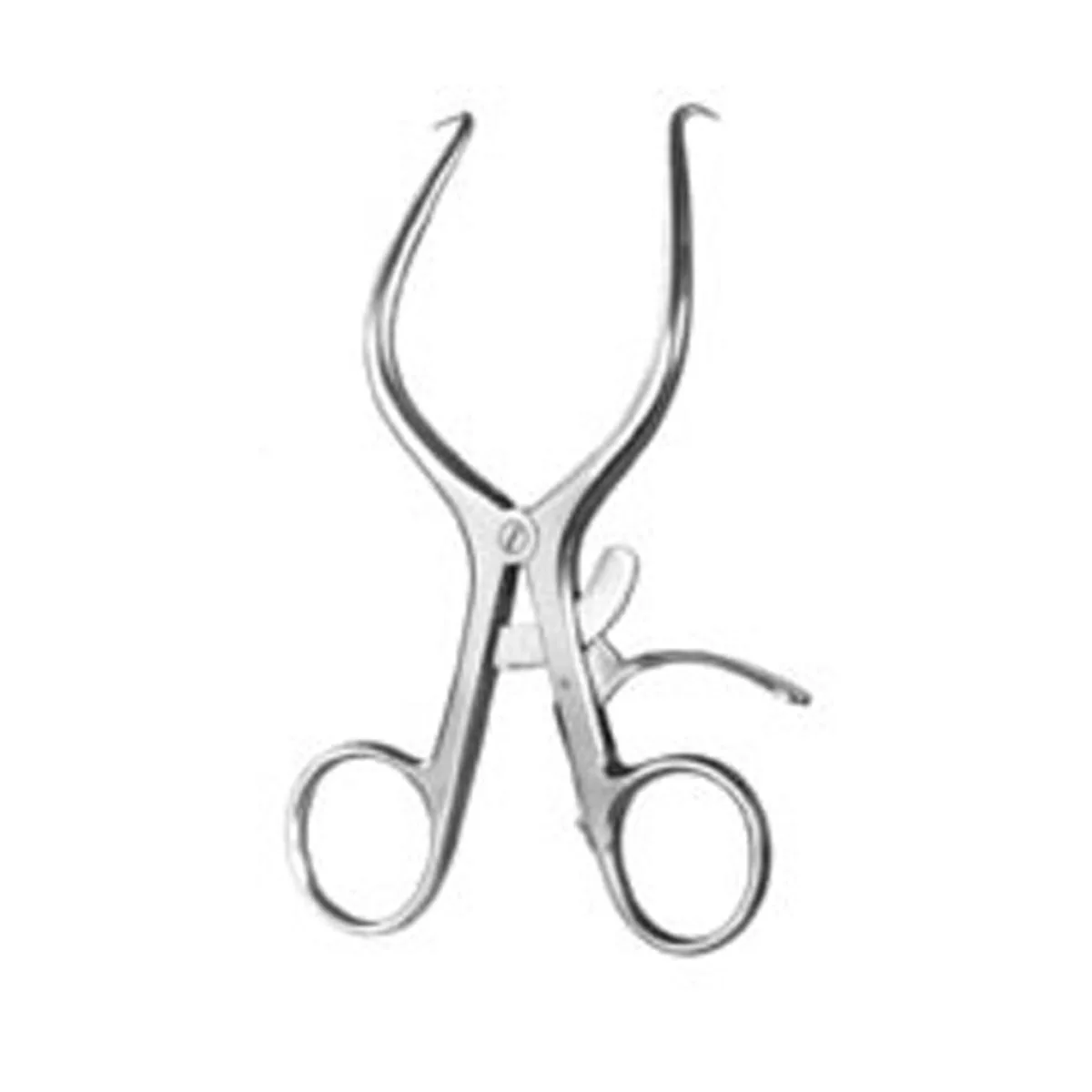
The Gelpi retractor is the small self-retaining workhorse for orthopedic and wound work: two outward-curving sharp tips on a scissor-like ratchet body. It reaches into narrow openings, spreads with a click and stays. Sharp tips mean it grips bone-side tissue confidently - and that it has no business pressing on bowel or vessels. Self-retaining retractors also demand discipline: never crank the ratchet further than the tissue allows, and count every one of them at closure.
Matching the pattern to the procedure
Notice the pattern: self-retaining retractors hold the main incision, handhelds handle the rest. Most well-equipped trays use both, and buying a complete self-retaining set instead of a matched handheld set (or the reverse) is the most common specification mistake - each cannot do the other's job.
Standardising the pattern per institution is worth more than chasing variety: once a surgical group commits to one family of hand-helds and one self-retaining frame, every reprocessing set, tray layout and teaching rotation follows it. Compatibility also simplifies replacement - a single Richardson size ordered four times a year beats four sizes ordered once, because trays stop drifting out of spec between audits.
| Region / task | Typical patterns | Why |
|---|---|---|
| Abdominal (laparotomy) | Balfour frame + Richardson | Self-retaining for the long hold, handheld for adjustment |
| Deep abdominal access | Deaver set | Curved blades hold viscera atraumatically at depth |
| Superficial / fascia | Farabeuf, Richardson | Blunt broad blades expose without marking |
| Orthopedic, joints, wounds | Gelpi | Sharp tips and ratchet spread narrow openings hands-free |
| Packaged dressing trays | Farabeuf, ribbon/malleable | Blunt, easy to clean, low cost per set |
Buying checklist and care
- Confirm blade geometry for the procedure: curved for depth, flat for surface, fenestrated (windowed) to reduce pressure points.
- Choose sharp or blunt explicitly on the order - the instrument name alone does not specify the tip.
- For self-retaining patterns, test the ratchet: it must engage in fine steps and release cleanly with one thumb.
- Check the blade-to-handle weld and any box joint for play; a wobble under load is a defect that shows up mid-procedure.
- Ask about finish: matte/satin blades cut glare under lights; mirror finishes look good in photographs and tire the eye.
- Retractors are simple steel, but they still go through the wash - follow the sterilization workflow for hinged and ratcheted parts, opening every mechanism before cleaning.
Frequently asked questions
What is the difference between a handheld and a self-retaining retractor?
A handheld retractor is pulled and positioned by an assistant and can be adjusted instantly; a self-retaining retractor locks open with a ratchet or frame, holds the incision at a constant depth without hands, and frees the assistant. Most abdominal procedures use both: a self-retaining frame for the main incision plus handhelds for the deeper corners.
What is the difference between a Richardson and a Deaver retractor?
The Richardson has a broad, shallow curved blade on a flat handle for general exposure along an incision - it is a surface and mid-depth tool. The Deaver is much longer with a narrow, deeply curved blade, designed to reach into the abdomen and hold back viscera atraumatically. Richardson for the incision edge, Deaver for inside the cavity.
When should a sharp retractor be used?
Sharp-tipped retractors such as the Gelpi are appropriate on tough tissue - fascia, bone-adjacent muscle, wound edges - where the tips must not slip. They should not be used against hollow organs, vessels or delicate structures, where a blunt pattern such as the Farabeuf or a blunt-blade Richardson variant is the correct choice.
What sizes of retractors should a general set include?
For abdominal work: a self-retaining Balfour-style frame with at least two side blade sizes, two or three Richardson hand-helds of different widths, and a graduated set of two to three Deavers for depth. Add a couple of small blunt Farabeufs for superficial and dressing use. Sizes should follow the hospital's typical patient anatomy and procedure mix.
How do you clean and sterilize retractors with ratchets?
Open the ratchet fully before washing so the teeth and the track are exposed, clean ultrasonically with a neutral enzymatic detergent, rinse with purified water and dry immediately. Ratchet mechanisms trap residue and are the first place corrosion starts - which is exactly why the full sterilization workflow matters more on self-retaining patterns than on solid blades.
Related guides
Ready to order?
SIALMED manufactures the instruments discussed in this guide in Sialkot, Pakistan under ISO 13485 and FDA registration. Browse the full catalogue or request a quote - replies within one business day.